Beef Stew
There’s just something about a slow-simmered beef stew that feels like a warm hug on a chilly evening. With its tender chunks of beef, melt-in-your-mouth vegetables, and deeply flavorful broth, this hearty dish is a timeless comfort food classic. Whether you’re cozied up on the couch or gathering around the dinner table with family, one spoonful of this stew brings an instant sense of home.
Behind the Recipe
The recipe for this beef stew was inspired by my grandmother’s Sunday tradition. Every weekend, the house would fill with the savory aroma of seared meat, garlic, and onions as the stew slowly simmered on the stove. No matter how hectic the week had been, we all made time to sit down together and enjoy this soul-soothing dish. It’s more than just food. It’s a memory, a tradition, and a way to share love in every bite.
Recipe Origin or Trivia
Beef stew has been a staple in cuisines around the world for centuries. From the French boeuf bourguignon to Irish stew and Hungarian goulash, each culture has added its own twist. The concept is simple: cook tough cuts of meat slowly until they become buttery soft. In many ways, beef stew began as peasant food, utilizing inexpensive cuts and whatever vegetables were on hand. Over time, it became a beloved comfort food across continents, especially during colder months.
Why You’ll Love Beef Stew
Let’s talk about why this dish is such a keeper in the kitchen.
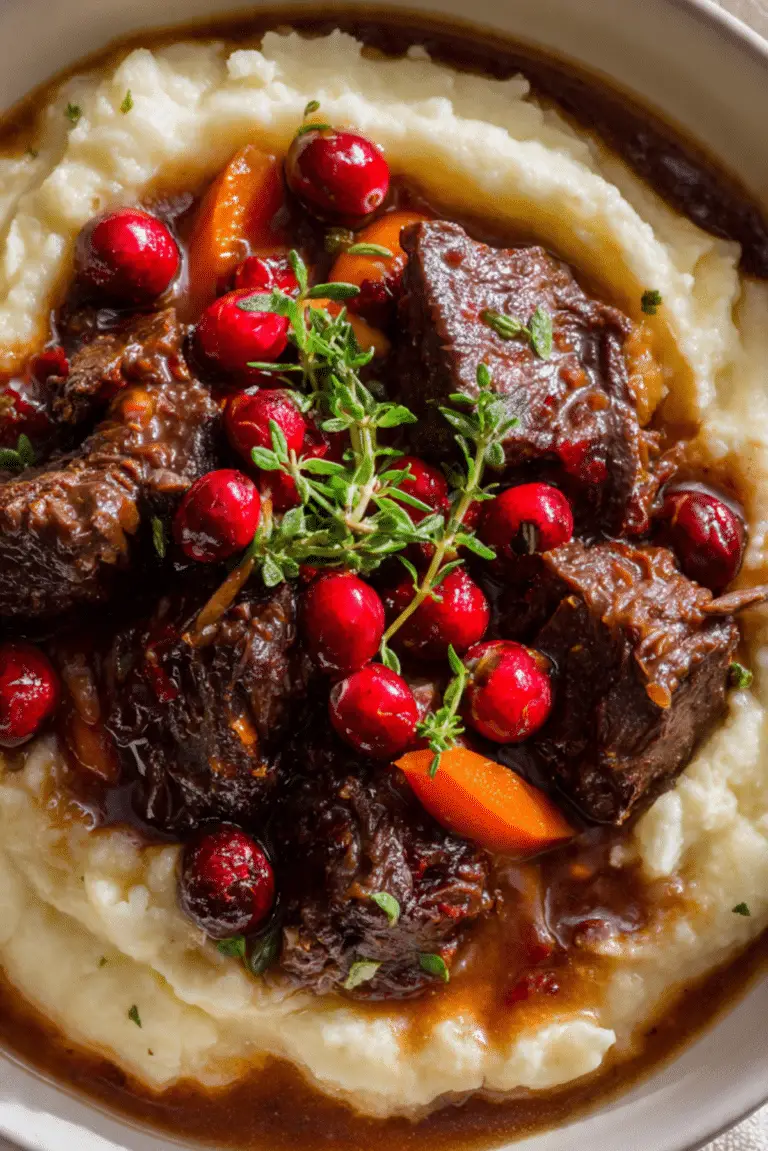
Versatile: You can switch up the veggies or even serve it over rice or mashed potatoes for a new twist.
Budget-Friendly: Uses affordable beef cuts and pantry staples that stretch into multiple servings.
Quick and Easy: The prep is simple, and then the pot does the work while it simmers away.
Customizable: Add herbs, spices, or swap vegetables depending on what’s in season or in your fridge.
Crowd-Pleasing: This stew is always a hit with family, friends, and even picky eaters.
Make-Ahead Friendly: It tastes even better the next day as the flavors deepen overnight.
Great for Leftovers: Stores beautifully and can be transformed into new meals.
Chef’s Pro Tips for Perfect Results
This stew might be classic, but a few small tricks make a big difference.
- Brown the beef in batches to develop a deep, flavorful crust.
- Deglaze the pot with a splash of broth or tomato paste to capture those caramelized bits.
- Simmer low and slow. Rushing ruins the tenderness.
- Add potatoes halfway through so they don’t get mushy.
- Let the stew rest before serving to allow the flavors to bloom.
Kitchen Tools You’ll Need
To make this stew seamless and stress-free, gather these tools first.
Dutch Oven or Large Pot: Deep enough to hold everything and great for slow simmering.
Sharp Knife: For dicing the beef and chopping vegetables cleanly.
Wooden Spoon: Perfect for stirring and scraping the bottom of the pot.
Cutting Board: Gives you a stable space for prepping ingredients.
Measuring Cups & Spoons: Keeps ingredient ratios just right.
Ingredients in Beef Stew
The beauty of beef stew lies in its humble yet powerful blend of ingredients, each one building comfort into every bite.
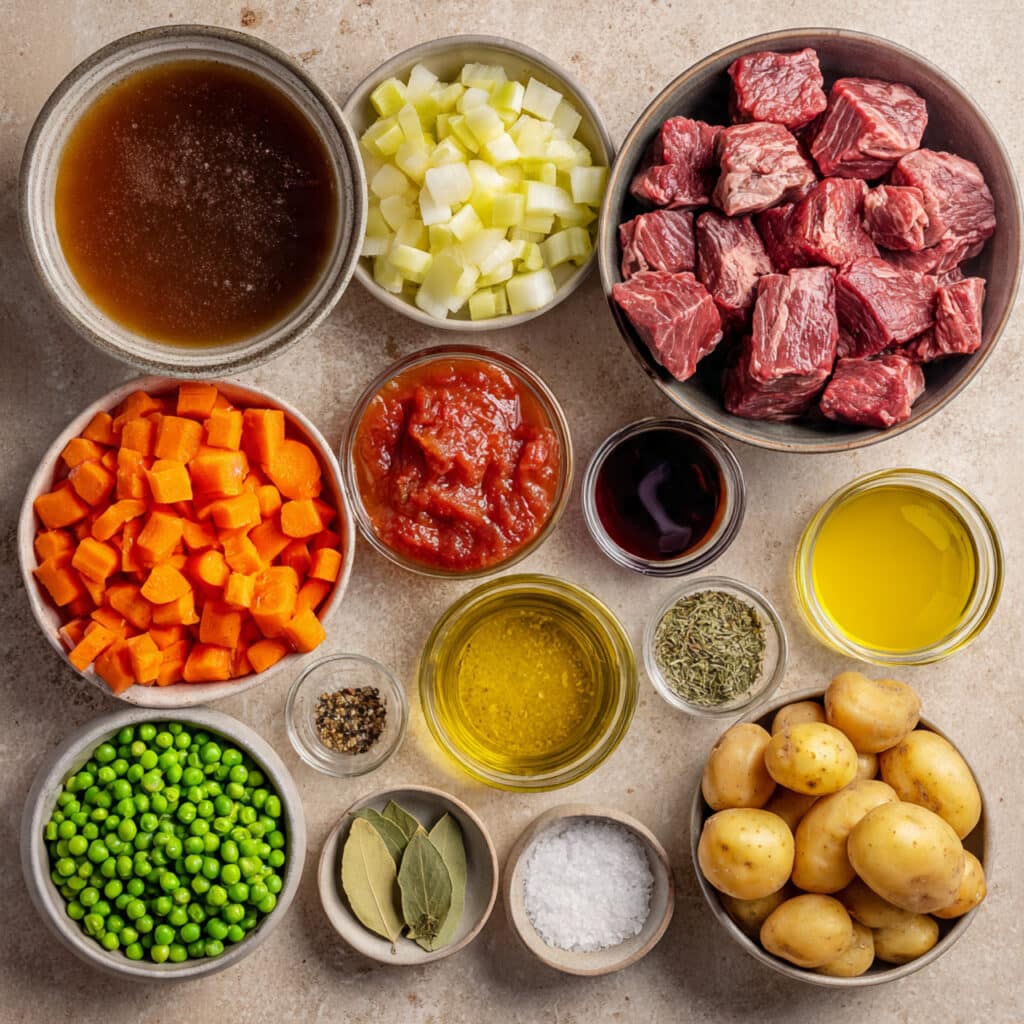
- Beef Chuck Roast: 2 pounds, cut into 1.5-inch cubes. This cut becomes incredibly tender after slow cooking.
- Yellow Onion: 1 large, diced. Adds sweetness and depth.
- Carrots: 3 large, peeled and sliced into thick rounds. Bring natural sweetness and color.
- Celery Stalks: 2, chopped. Add herbal notes and texture.
- Garlic Cloves: 4, minced. Infuse the stew with bold flavor.
- Tomato Paste: 2 tablespoons. Adds richness and a touch of tang.
- Beef Broth: 4 cups. Forms the savory base of the stew.
- Worcestershire Sauce: 1 tablespoon. Boosts umami and adds complexity.
- Bay Leaves: 2. Slowly release flavor throughout cooking.
- Dried Thyme: 1 teaspoon. Offers earthy aroma and balance.
- Red Potatoes: 4 medium, quartered. Hold their shape and soak up flavor.
- Frozen Peas: 1 cup. Added at the end for color and freshness.
- Salt and Black Pepper: To taste. Essential for seasoning.
- Olive Oil: 2 tablespoons. Used to brown the meat and sauté aromatics.
- Flour: 1/4 cup. Lightly coats the beef for browning and helps thicken the broth.
Ingredient Substitutions
Need to adjust based on what you’ve got? No problem.
Beef Chuck Roast: Boneless short rib or stewing beef.
Red Potatoes: Yukon gold or russet potatoes.
Frozen Peas: Green beans or chopped spinach.
Worcestershire Sauce: Soy sauce or balsamic vinegar.
Flour: Cornstarch or gluten-free flour blend.
Ingredient Spotlight
Beef Chuck Roast: This cut is marbled with just enough fat to stay juicy and flavorful after a long simmer.
Tomato Paste: A secret powerhouse, adding acidity, color, and a rich umami base that ties everything together.
Instructions for Making Beef Stew
We’re about to make magic in a pot. Here’s how to build layers of flavor into your beef stew.
-
Preheat Your Equipment:
Heat a large Dutch oven or heavy-bottomed pot over medium-high heat and add olive oil. -
Combine Ingredients:
Toss beef cubes in flour, salt, and pepper. Brown in batches, searing all sides. Remove and set aside. -
Prepare Your Cooking Vessel:
In the same pot, add a bit more oil if needed. Sauté onions, garlic, carrots, and celery until softened. Stir in tomato paste and cook for 2 minutes. -
Assemble the Dish:
Return browned beef to the pot. Pour in beef broth, Worcestershire sauce, thyme, and bay leaves. Stir well and bring to a gentle boil. -
Cook to Perfection:
Lower heat, cover, and simmer for 1.5 hours. Add potatoes and cook uncovered for another 30–40 minutes until beef is fork-tender and potatoes are cooked. -
Finishing Touches:
Stir in peas during the last 5 minutes of cooking. Taste and adjust seasoning with salt and pepper. -
Serve and Enjoy:
Ladle the hot stew into bowls, garnish with fresh parsley if desired, and serve with crusty bread.
Texture & Flavor Secrets
What makes this stew unforgettable is the contrast of textures and the depth of flavor. The beef is tender and juicy, the vegetables soft but still structured, and the broth is rich and velvety. A slight sweetness from the carrots balances the umami from tomato paste and Worcestershire sauce. Every spoonful delivers a satisfying, cozy mouthfeel.
Cooking Tips & Tricks
Get even better results with these easy tweaks:
- Use wine-free broth for a kid-friendly version with full flavor.
- Stir occasionally to prevent sticking at the bottom.
- Let leftovers sit overnight to develop an even deeper flavor.
- Add a splash of balsamic vinegar for brightness if it tastes too heavy.
What to Avoid
Avoid these common missteps to keep your stew on point:
- Overcrowding the pan: Sear beef in batches or it will steam, not brown.
- Rushing the simmer: Low and slow is what transforms tough cuts into buttery goodness.
- Adding peas too early: They’ll turn mushy and lose their bright color.
- Skipping seasoning: Always taste and adjust before serving.
Nutrition Facts
Servings: 6
Calories per serving: 420
Note: These are approximate values.
Preparation Time
Prep Time: 25 minutes
Cook Time: 2 hours
Total Time: 2 hours 25 minutes
Make-Ahead and Storage Tips
Beef stew is a perfect make-ahead meal. Prepare it up to two days in advance and store in an airtight container in the fridge. The flavors will deepen beautifully. For longer storage, freeze in portions for up to 3 months. Reheat gently over the stove or in the microwave, adding a splash of broth if needed to loosen it up.
How to Serve Beef Stew
This dish pairs beautifully with warm crusty bread, buttered noodles, or creamy mashed potatoes. A side of roasted green beans or a crisp salad makes a nice contrast. For a cozy dinner, serve it in deep bowls with a sprinkle of chopped parsley and a wedge of lemon on the side.
Creative Leftover Transformations
Turn your leftover beef stew into delicious new meals.
- Shepherd’s Pie: Spoon stew into a baking dish and top with mashed potatoes. Bake until golden.
- Beef Pot Pie: Fill a pie crust or puff pastry with the stew and bake for a rustic, flaky dinner.
- Stew Pasta Bake: Mix with cooked pasta and a handful of cheese, then bake.
Additional Tips
- Simmer uncovered if you want a thicker broth.
- Use fresh herbs like rosemary or parsley for a bright finish.
- Add a splash of vinegar or lemon juice before serving to lift the flavors.
Make It a Showstopper
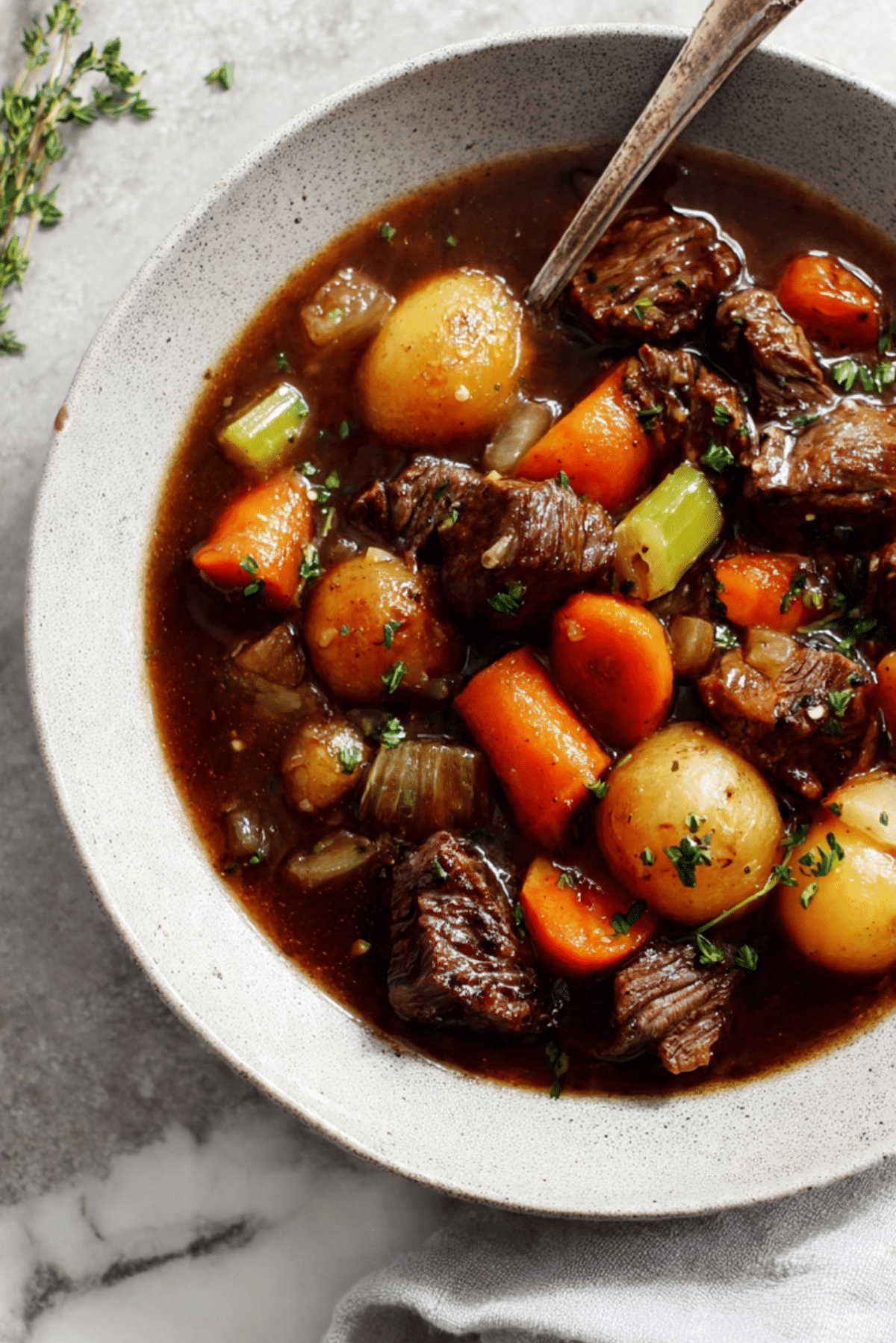
Presentation matters, even with stew. Serve it in deep, rustic bowls with a garnish of fresh herbs and a twist of black pepper on top. Use a linen napkin and a vintage-style spoon to elevate the comfort-food feel. A drizzle of olive oil just before serving can add a glossy, gourmet touch.
Variations to Try
- Mushroom Stew: Add chopped mushrooms for a deeper umami profile.
- Spicy Kick: Stir in red pepper flakes or diced jalapeños.
- Root Veggie Mix: Swap in parsnips, turnips, or sweet potatoes.
- Creamy Version: Stir in a splash of cream or coconut milk near the end.
- Herb-Forward: Use fresh thyme, rosemary, or tarragon for a fragrant twist.
FAQ’s
Q1: Can I make beef stew in a slow cooker?
A1: Yes, just sear the beef and sauté aromatics first, then add everything to the slow cooker and cook on low for 8 hours.
Q2: Can I freeze beef stew?
A2: Absolutely. Let it cool completely, then freeze in airtight containers for up to 3 months.
Q3: What’s the best cut of beef for stew?
A3: Beef chuck roast is ideal because it gets tender without drying out.
Q4: Can I add wine?
A4: While traditional recipes do, this version keeps it alcohol-free. A splash of balsamic can offer a similar depth.
Q5: How can I thicken the stew more?
A5: Simmer uncovered or stir in a cornstarch slurry at the end.
Q6: Should I peel the potatoes?
A6: Not necessary if using red or Yukon gold potatoes. Their skins are tender and flavorful.
Q7: What herbs work well in beef stew?
A7: Thyme, bay leaf, and parsley are classic. Rosemary also adds a nice punch.
Q8: Can I use canned veggies?
A8: Fresh or frozen is best for texture, but canned can work in a pinch. Just add them at the very end.
Q9: Can I use chicken instead of beef?
A9: Technically yes, but it changes the dish completely. Try a chicken stew recipe instead.
Q10: What side dishes go best with beef stew?
A10: Crusty bread, mashed potatoes, or buttered egg noodles are great options.
Conclusion
There you have it, a beef stew that’s rich in flavor, easy to make, and full of heart. Whether you’re whipping it up for a quiet weeknight dinner or feeding a hungry crowd, this recipe is one you’ll come back to time and time again. Trust me, you’re going to love this.
Print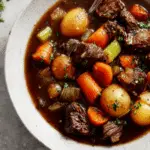
Beef Stew
Description
Hearty, comforting, and rich, this beef stew is filled with tender chunks of beef, soft vegetables, and a deeply flavorful broth that brings warmth to any meal.
Ingredients
- 2 pounds beef chuck roast, cut into 1.5-inch cubes
- 1 large yellow onion, diced
- 3 large carrots, peeled and sliced
- 2 celery stalks, chopped
- 4 garlic cloves, minced
- 2 tablespoons tomato paste
- 4 cups beef broth
- 1 tablespoon Worcestershire sauce
- 2 bay leaves
- 1 teaspoon dried thyme
- 4 medium red potatoes, quartered
- 1 cup frozen peas
- Salt and pepper, to taste
- 2 tablespoons olive oil
- 1/4 cup all-purpose flour
Instructions
- Heat a large Dutch oven over medium-high heat and add olive oil.
- Toss beef cubes with flour, salt, and pepper. Brown in batches on all sides. Remove and set aside.
- In the same pot, add more oil if needed. Sauté onions, garlic, carrots, and celery until softened. Stir in tomato paste and cook for 2 minutes.
- Return beef to the pot. Add broth, Worcestershire sauce, thyme, and bay leaves. Stir and bring to a boil.
- Reduce heat, cover, and simmer for 1.5 hours. Add potatoes and cook uncovered for 30–40 minutes until beef is tender and potatoes are cooked.
- Stir in peas during the last 5 minutes of cooking. Adjust seasoning.
- Serve hot with garnish if desired.
Notes
- Browning the beef adds extra flavor—don’t skip this step.
- Let the stew rest for a few minutes before serving to deepen the flavor.
- For a thicker stew, simmer uncovered during the last 20 minutes.
- Add a splash of balsamic vinegar or lemon juice for brightness.