
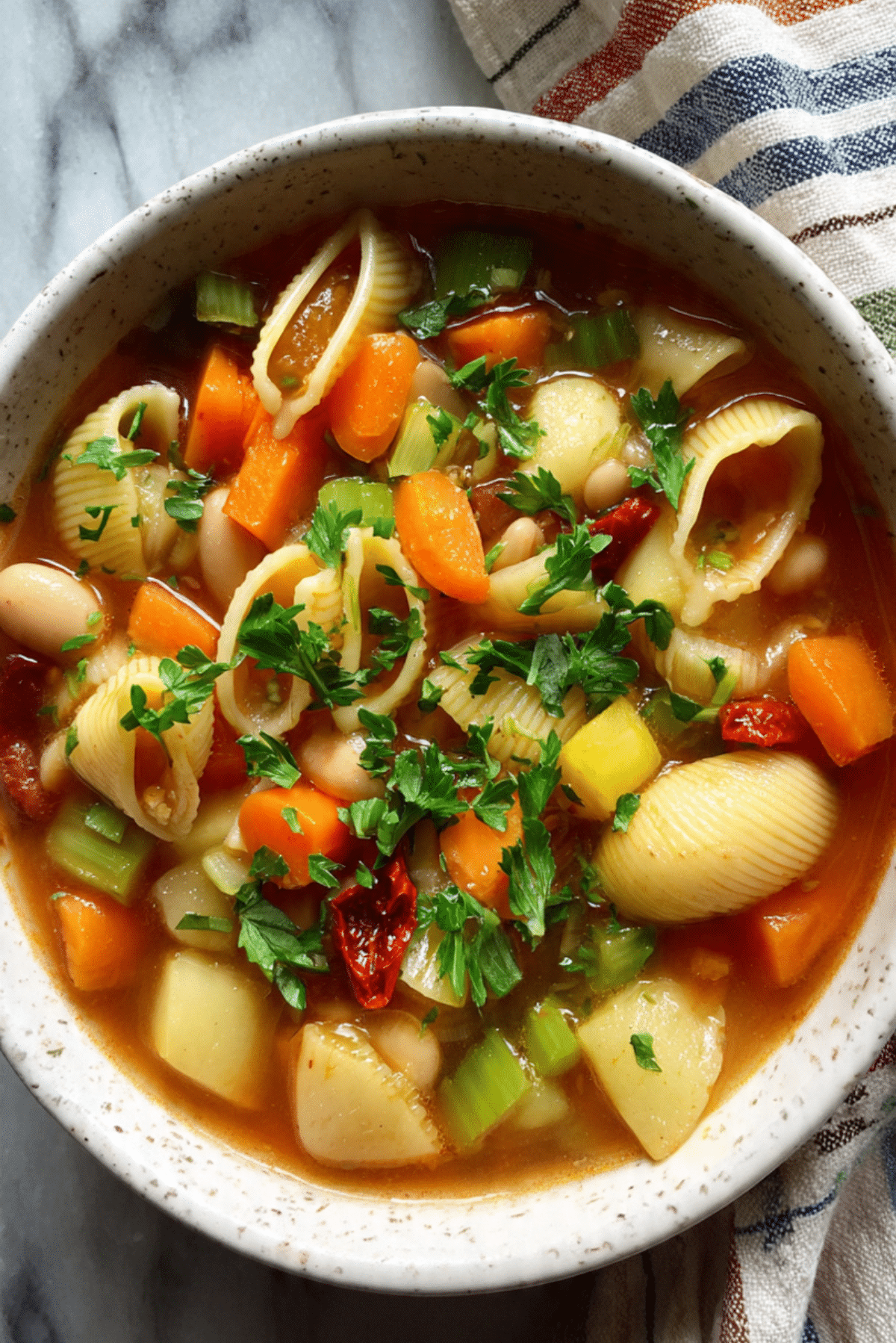
Minestrone
Minestrone is one of those hearty, soul-soothing bowls that feels like a warm hug on a chilly evening. Packed with colorful vegetables, tender pasta, and simmered in a rich tomato broth, it’s a dish that brings both comfort and vibrance to the table. Whether you’re curling up on the couch or hosting a casual dinner with friends, minestrone never disappoints. The aroma alone is enough to draw everyone into the kitchen, curious and hungry for that first spoonful.
Behind the Recipe
Growing up, minestrone was one of the first things I learned to make with my grandmother. She called it her “everything soup” because it welcomed whatever veggies we had on hand. There was something magical about watching her stir the pot, adding a pinch of this and a handful of that, all while telling stories about how her mother made it back in the day. To this day, the scent of simmering garlic and tomatoes transports me right back to her cozy little kitchen. This recipe carries that same spirit of love, nourishment, and homemade simplicity.
Recipe Origin or Trivia
Minestrone traces its roots back to Italy, where it was born out of necessity and creativity. In the peasant kitchens of the past, no food was wasted, so leftovers and seasonal vegetables were transformed into this satisfying soup. The word “minestrone” itself comes from “minestra,” meaning soup, and it has evolved across regions to include unique local ingredients. In the north, you might find it thick with rice and beans, while in the south, it leans more tomato-forward and spicy. No matter where you are, minestrone remains a symbol of resourceful, rustic cooking at its best.
Why You’ll Love Minestrone
Trust me, you’re going to love this one. It’s nourishing, cozy, and absolutely brimming with flavor.
Versatile: You can use whatever vegetables are in season or what’s left in your fridge.
Budget-Friendly: Simple pantry staples and fresh produce make this a cost-effective meal.
Quick and Easy: Everything simmers in one pot, and most of the work is hands-off.
Customizable: Swap pasta for rice, add beans of your choice, or make it spicy.
Crowd-Pleasing: It’s warm, comforting, and satisfying for everyone at the table.
Make-Ahead Friendly: Tastes even better the next day once the flavors meld.
Great for Leftovers: Store it in the fridge and enjoy a ready-made meal for days.
Chef’s Pro Tips for Perfect Results
The secret to an unforgettable minestrone lies in the little things. Here’s how to make yours shine.
- Sauté for Flavor: Take time to sauté onions, garlic, and carrots well before adding the liquid. This base builds deep flavor.
- Layer Ingredients: Add heartier veggies first and soft ones later so everything is cooked just right.
- Add Pasta Last: Cook the pasta separately and add it before serving to avoid it getting soggy.
- Simmer Gently: Don’t boil too hard. A gentle simmer helps all the ingredients release their flavor slowly.
- Finish with Freshness: A drizzle of olive oil, fresh herbs, or a grating of Parmesan adds brightness right before serving.
Kitchen Tools You’ll Need
You don’t need anything fancy, just a few basic tools to bring this rustic Italian soup to life.
Large Pot or Dutch Oven: For cooking all your ingredients in one place.
Wooden Spoon: To stir and scrape the bottom without damaging your pot.
Chef’s Knife: To chop all those beautiful veggies.
Cutting Board: Gives you space to work efficiently and safely.
Measuring Cups and Spoons: For consistent seasoning and broth ratio.
Ingredients in Minestrone
This colorful medley of ingredients makes each spoonful a little adventure of its own.
- Olive Oil: 2 tablespoons. For sautéing and adding that signature Italian richness.
- Yellow Onion: 1 large, diced. Brings sweet depth to the broth.
- Garlic: 3 cloves, minced. Adds warm, aromatic flavor.
- Carrots: 2 medium, sliced. Sweet and tender with a little bite.
- Celery: 2 stalks, chopped. Adds crunch and classic soup flavor.
- Zucchini: 1 medium, diced. Brings freshness and lightness.
- Potatoes: 2 small, diced. Hearty and grounding in every bite.
- Green Beans: 1 cup, chopped. Crisp texture and color.
- Diced Tomatoes: 1 can (14.5 oz). Brings acidity and body to the broth.
- Tomato Paste: 2 tablespoons. Deepens the tomato flavor.
- Vegetable Broth: 6 cups. The flavorful liquid that ties it all together.
- Cannellini Beans: 1 can, drained. Creamy and protein-rich.
- Red Kidney Beans: 1 can, drained. Earthy flavor and hearty texture.
- Pasta Shells: 1 cup. Soaks up flavor and adds chew.
- Italian Seasoning: 2 teaspoons. For that herbaceous, savory depth.
- Salt and Pepper: To taste. Essential for balance.
- Fresh Parsley: ¼ cup, chopped. Brightens and finishes the soup.
Ingredient Substitutions
Feel free to tweak based on what you have on hand.
Zucchini: Yellow squash.
Cannellini Beans: Navy beans or great northern beans.
Pasta Shells: Elbow macaroni or ditalini.
Vegetable Broth: Chicken broth (if not vegetarian).
Tomato Paste: Extra diced tomatoes or crushed tomatoes.
Ingredient Spotlight
Olive Oil: A staple in Italian cooking, it adds richness and helps carry the flavors of garlic and herbs.
Cannellini Beans: These creamy white beans provide protein and a buttery texture that balances the veggie crunch.

Instructions for Making Minestrone
Let’s roll up our sleeves and bring this bowl of comfort to life. Follow along and you’ll have soup simmering in no time.
-
Preheat Your Equipment:
Place your Dutch oven or large pot over medium heat and add the olive oil. -
Combine Ingredients:
Add diced onions, garlic, carrots, and celery. Sauté for about 5 minutes until fragrant and softened. -
Prepare Your Cooking Vessel:
Stir in tomato paste, diced tomatoes, and your seasoning. Cook for 2–3 minutes to blend the flavors. -
Assemble the Dish:
Add the potatoes, green beans, zucchini, and broth. Stir everything together and bring to a gentle boil. -
Cook to Perfection:
Lower heat and let it simmer for 20 minutes or until veggies are just tender. Add the beans and continue to simmer for another 5 minutes. -
Finishing Touches:
Stir in cooked pasta shells and fresh parsley. Taste and adjust salt and pepper as needed. -
Serve and Enjoy:
Ladle into bowls and serve with a drizzle of olive oil or a sprinkle of Parmesan if desired.
Texture & Flavor Secrets
What makes minestrone sing is the way textures and tastes come together. The beans add creaminess, the pasta gives chew, and the vegetables each bring their own personality. From the snap of green beans to the tenderness of potatoes and zucchini, every spoonful is layered. The tomato broth, slightly sweet and tangy, hugs each bite with comforting warmth and depth.
Cooking Tips & Tricks
Little touches go a long way in making this recipe shine.
- Sauté your aromatics until golden for maximum flavor.
- Always taste as you go and adjust seasoning gradually.
- Use day-old pasta or cook it separately if making the soup ahead.
What to Avoid
Avoiding a few common missteps will keep your soup delicious.
- Overcooking the pasta, which turns it mushy. Cook it separately and add just before serving.
- Skipping the sauté step, which flattens the flavor profile.
- Using too much broth, which can make it watery and dilute the richness.
Nutrition Facts
Servings: 6
Calories per serving: 290
Note: These are approximate values.
Preparation Time
Prep Time: 15 minutes
Cook Time: 30 minutes
Total Time: 45 minutes
Make-Ahead and Storage Tips
Minestrone is a champion when it comes to planning ahead. You can prep all your veggies in advance and store them in the fridge. The cooked soup keeps well for up to 4 days and actually tastes even better the next day. Freeze portions without pasta for up to 3 months. Reheat gently on the stove and add fresh pasta when serving.
How to Serve Minestrone
Minestrone is best enjoyed hot with a slice of crusty bread or a sprinkle of grated cheese on top. A side salad or roasted garlic toast makes it a full meal. Drizzle a bit of olive oil or spoon in some pesto for an extra flavor kick.
Creative Leftover Transformations
Leftover minestrone? You’re in luck.
- Use it as a pasta sauce base with extra herbs.
- Blend it slightly for a thicker stew-like meal.
- Pour over baked potatoes or grains like quinoa or couscous.
Additional Tips
- Add a Parmesan rind to the pot while it simmers for rich, cheesy undertones.
- Stir in a spoonful of pesto or chili oil just before serving for a gourmet twist.
- Let the soup rest 10 minutes before serving to let the flavors mingle.
Make It a Showstopper
Presentation makes the first impression. Serve in a deep, white bowl to highlight the colorful ingredients. Garnish with parsley, a tiny swirl of olive oil, and fresh cracked pepper. Lay a napkin casually beside it and keep the spoon ready for that first hearty dip.
Variations to Try
- Spicy Minestrone: Add chili flakes or a touch of harissa for warmth.
- Tuscan Style: Use kale instead of green beans and a swirl of pesto at the end.
- Grain Swap: Try farro or barley instead of pasta.
- Creamy Version: Stir in a bit of coconut milk or cream for a silky texture.
- No Tomato: Skip tomatoes and use extra herbs and a squeeze of lemon for a clear broth style.
FAQ’s
Q1: Can I use frozen vegetables in minestrone?
Yes, just add them towards the end so they don’t get too soft.
Q2: What’s the best pasta shape for this soup?
Small shapes like shells, elbows, or ditalini work great.
Q3: Can I make it gluten-free?
Absolutely. Just use gluten-free pasta or replace it with rice.
Q4: How do I thicken my minestrone?
Simmer longer or blend a cup of the soup and stir it back in.
Q5: Can I use canned beans?
Yes. Drain and rinse them before adding.
Q6: How do I reheat minestrone?
Stovetop is best. Add a splash of water or broth as it thickens when chilled.
Q7: Can I cook it in a slow cooker?
Sure. Just add pasta at the end or cook it separately.
Q8: Should I peel the potatoes?
It’s up to you. Thin-skinned potatoes can be left unpeeled.
Q9: Is minestrone vegan?
This version is. Just skip cheese garnishes or use dairy-free.
Q10: How long does it keep?
Up to 4 days in the fridge, or 3 months frozen (without pasta).
Conclusion
There’s something about a bowl of minestrone that feels like home. It’s rustic, wholesome, and incredibly satisfying, whether it’s your first time making it or your hundredth. So next time you’re craving a warm, hearty hug in a bowl, let minestrone be the answer. Let me tell you, it’s worth every bite.
Print
Minestrone
Description
A warm and hearty Italian vegetable soup loaded with pasta, beans, and seasonal vegetables in a rich tomato broth. Perfect for chilly evenings and make-ahead meals.
Ingredients
- 2 tablespoons olive oil
- 1 large yellow onion, diced
- 3 cloves garlic, minced
- 2 medium carrots, sliced
- 2 stalks celery, chopped
- 1 medium zucchini, diced
- 2 small potatoes, diced
- 1 cup green beans, chopped
- 1 can (14.5 oz) diced tomatoes
- 2 tablespoons tomato paste
- 6 cups vegetable broth
- 1 can cannellini beans, drained
- 1 can red kidney beans, drained
- 1 cup pasta shells
- 2 teaspoons Italian seasoning
- Salt and pepper to taste
- 1/4 cup fresh parsley, chopped
Instructions
- Place your Dutch oven or large pot over medium heat and add olive oil.
- Add diced onions, garlic, carrots, and celery. Sauté for 5 minutes until softened and fragrant.
- Stir in tomato paste, diced tomatoes, and Italian seasoning. Cook for 2–3 minutes.
- Add potatoes, green beans, zucchini, and vegetable broth. Stir and bring to a gentle boil.
- Lower heat and simmer for 20 minutes until vegetables are tender. Add beans and simmer for another 5 minutes.
- Stir in cooked pasta and fresh parsley. Season with salt and pepper to taste.
- Ladle into bowls and serve warm with optional garnishes.
Notes
- Cook pasta separately to avoid it becoming soggy in leftovers.
- Store soup without pasta for freezing.
- Add a Parmesan rind while simmering for extra depth.
- Use any seasonal veggies you have on hand.