
Pot Roast
There’s something undeniably comforting about a pot roast. The aroma of tender beef simmering away in a rich broth with chunks of carrots, potatoes, and herbs filling the kitchen is like a warm hug. It’s a dish that calls everyone to the table, no matter the day or season. The best part? The magic happens low and slow, giving you melt-in-your-mouth goodness with little hands-on time.
Behind the Recipe
This pot roast recipe was inspired by cozy Sunday dinners growing up, when the scent of rosemary and garlic would waft through the house long before dinner was served. My grandmother used to say that the secret to the best roast was patience and good beef, and after all these years, I couldn’t agree more. It’s the kind of dish that invites you to slow down, take a deep breath, and savor every bite.
Recipe Origin or Trivia
The classic pot roast has roots in European peasant cooking, especially French and German traditions. In France, it’s known as “boeuf à la mode” and in Germany, it’s similar to “sauerbraten.” Immigrants brought these methods to America, adapting the recipe with local ingredients and meat cuts. Over time, the American pot roast became a symbol of family dinners, often cooked in a Dutch oven or slow cooker to create that irresistible fork-tender texture.
Why You’ll Love Pot Roast
A dish that checks every box, this pot roast is more than just dinner. It’s comfort, convenience, and flavor all in one.
Versatile: Serve it over mashed potatoes, egg noodles, or even crusty bread.
Budget-Friendly: Uses an affordable cut of meat that becomes luxurious after slow cooking.
Quick and Easy: Minimal prep. The oven does most of the work while you relax.
Customizable: Toss in your favorite root vegetables or swap in fresh herbs to make it yours.
Crowd-Pleasing: Perfect for gatherings, everyone loves a good roast.
Make-Ahead Friendly: Tastes even better the next day after the flavors meld.
Great for Leftovers: Turn it into sandwiches, hash, or soup the next day.
Chef’s Pro Tips for Perfect Results
Before we dive into the cooking process, here are a few insider tricks to ensure your pot roast is the star of the table.
- Sear the meat well: Don’t skip this step. A good sear locks in juices and adds deep, complex flavor to the final dish.
- Use whole carrots and potatoes: They hold their shape better during the long cook time and have a more satisfying bite.
- Low and slow wins: Give it time. At least 3 hours in the oven at low heat turns a tough cut into buttery tenderness.
- Add herbs at the right time: Add hearty herbs like thyme and rosemary early, but toss in delicate ones like parsley at the end to brighten things up.
- Rest before serving: Let the roast rest for about 15 minutes before slicing to keep it juicy.
Kitchen Tools You’ll Need
You don’t need a fancy setup, just a few trusty kitchen staples.
Dutch Oven: Essential for even heat distribution and perfect braising.
Tongs: Great for turning the meat during searing.
Cutting Board: For prepping vegetables and slicing the roast.
Chef’s Knife: A sharp one makes prepping quick and clean.
Ladle: Helps spoon out that rich gravy with ease.
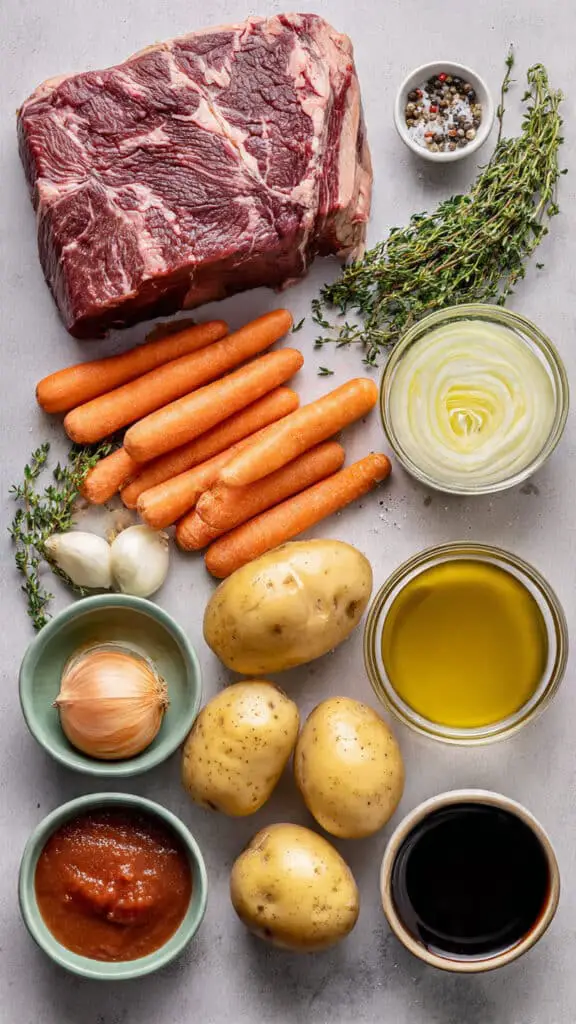
Ingredients in Pot Roast
Let’s take a closer look at what makes this pot roast so flavorful and hearty.
-
Chuck Roast: 3 to 4 pounds
This cut is marbled with fat, which makes it ideal for slow cooking until fall-apart tender. -
Carrots: 4 large, peeled and cut into chunks
Adds sweetness and a soft, tender bite. -
Baby Potatoes: 1.5 pounds, whole
Soak up all the juices and add satisfying substance to each serving. -
Yellow Onion: 1 large, sliced
Melts into the gravy for rich, aromatic depth. -
Garlic: 4 cloves, minced
Builds a savory base flavor. -
Beef Broth: 3 cups
Provides the liquid for braising and forms the base of the gravy. -
Tomato Paste: 2 tablespoons
Adds a touch of acidity and richness. -
Worcestershire Sauce: 2 tablespoons
Brings a savory, umami kick. -
Fresh Thyme: 4 to 5 sprigs
Infuses the dish with herbal notes. -
Salt: 2 teaspoons
Enhances all the natural flavors. -
Black Pepper: 1 teaspoon
Adds a subtle kick and rounds out the seasoning. -
Olive Oil: 2 tablespoons
Used for searing the beef to golden perfection.
Ingredient Substitutions
Need to switch things up? Here are some easy swaps.
Chuck Roast: Brisket or bottom round.
Baby Potatoes: Yukon gold or red potatoes cut into large chunks.
Tomato Paste: Crushed tomatoes or even a spoonful of ketchup in a pinch.
Worcestershire Sauce: Soy sauce with a splash of vinegar.
Beef Broth: Vegetable broth or chicken broth if needed.
Ingredient Spotlight
Chuck Roast: This cut comes from the shoulder and is known for its connective tissue, which breaks down beautifully with slow cooking, creating unbeatable tenderness.
Worcestershire Sauce: A secret weapon for adding deep umami flavor without overpowering the dish.
Instructions for Making Pot Roast
Cooking pot roast feels more like crafting a memory than following a recipe. Here’s how to bring it to life.
-
Preheat Your Equipment:
Set your oven to 300°F (150°C) and place a Dutch oven on the stovetop over medium-high heat. -
Combine Ingredients:
Season the roast generously with salt and pepper. In a small bowl, mix tomato paste, garlic, Worcestershire, and a bit of broth. -
Prepare Your Cooking Vessel:
Heat olive oil in the Dutch oven. Sear the roast on all sides until deeply browned, about 4 minutes per side. Remove and set aside. -
Assemble the Dish:
Add onions to the pot and sauté for 3 minutes. Stir in the tomato paste mixture. Place roast back in, surround with carrots, potatoes, thyme, and pour in the broth. -
Cook to Perfection:
Cover and place in the oven. Cook for 3 to 3.5 hours until the meat is fork-tender and vegetables are soft. -
Finishing Touches:
Skim fat if needed. Taste and adjust salt or pepper. Sprinkle chopped parsley if desired. -
Serve and Enjoy:
Plate generous portions of roast, veggies, and spoon plenty of gravy over top. Serve hot with crusty bread or over mashed potatoes.
Texture & Flavor Secrets
The beauty of pot roast lies in its contrast of textures. The beef becomes melt-in-your-mouth tender, the carrots soft but not mushy, and the potatoes rich and creamy. The gravy is silky and deep, with hints of garlic, herbs, and that slow-cooked magic that only time can create.
Cooking Tips & Tricks
To make this pot roast truly unforgettable:
- Use a heavy pot: A Dutch oven maintains heat and keeps things tender.
- Let the meat rest: This keeps it from drying out and locks in those flavorful juices.
- Deglaze the pan: After searing, scrape up the browned bits for added flavor.
What to Avoid
A few simple missteps can affect your results, but they’re easy to avoid.
- Skipping the sear: You’ll lose depth and richness.
- Overcrowding the pot: Make sure there’s enough room for liquid to circulate.
- Cooking too fast: High heat will dry out the beef instead of breaking it down.
Nutrition Facts
Servings: 6
Calories per serving: 520
Note: These are approximate values.
Preparation Time
Prep Time: 20 minutes
Cook Time: 3 hours 30 minutes
Total Time: 3 hours 50 minutes
Make-Ahead and Storage Tips
This pot roast is a great candidate for prepping in advance. You can make the entire dish a day ahead and reheat gently on the stove. Store leftovers in an airtight container in the fridge for up to 4 days or freeze for up to 2 months. Reheat slowly to maintain texture and flavor.
How to Serve Pot Roast
This roast shines when served with creamy mashed potatoes, buttery noodles, or even polenta. Add a slice of crusty bread for mopping up that dreamy gravy. For a lighter touch, serve with a green salad tossed in a tangy vinaigrette.
Creative Leftover Transformations
Leftovers are where the fun begins.
- Pot Roast Sandwiches: Add pickles and mustard on a crusty bun.
- Beef Hash: Sauté with diced potatoes and onions, then top with a fried egg.
- Savory Pot Pie: Use leftover meat and veggies with puff pastry for a quick pie.
Additional Tips
For even more flavor:
- Squeeze in a bit of lemon juice at the end to brighten up the dish.
- Add mushrooms or parsnips for a rustic twist.
- Thicken the gravy with a cornstarch slurry if you like it more saucy.
Make It a Showstopper
Presentation matters. Serve your roast on a large platter with the vegetables arranged around it. Drizzle gravy over the top and sprinkle fresh herbs like parsley or thyme. A rustic linen napkin and a wooden spoon nearby give it that cozy, farmhouse table look.
Variations to Try
- Italian Pot Roast: Add crushed tomatoes, rosemary, and a splash of balsamic vinegar.
- Spicy Kick: Stir in chili flakes or smoked paprika for heat.
- Root Veggie Swap: Swap carrots for parsnips or sweet potatoes.
- Mushroom Lover’s Version: Add baby bella mushrooms for an earthy twist.
- Garlic Explosion: Roast a whole garlic bulb and stir in the soft cloves at the end.
FAQ’s
Q1: Can I make pot roast in a slow cooker?
A1: Absolutely. After searing, place everything in the slow cooker and cook on low for 8 hours.
Q2: What’s the best cut of beef for pot roast?
A2: Chuck roast is ideal because it becomes incredibly tender when slow-cooked.
Q3: Can I use wine in the broth?
A3: You can, but this version keeps it alcohol-free for everyone to enjoy.
Q4: How do I thicken the gravy?
A4: Mix 1 tablespoon cornstarch with 2 tablespoons water and stir into the hot liquid.
Q5: Can I freeze leftovers?
A5: Yes, freeze in airtight containers for up to 2 months. Thaw overnight before reheating.
Q6: Can I use a pressure cooker?
A6: Yes, pressure cook for about 60 minutes followed by natural release.
Q7: What other herbs work well?
A7: Rosemary, bay leaves, and oregano are all great additions.
Q8: Should I peel the potatoes?
A8: Not necessary for baby potatoes, but feel free to peel if using larger ones.
Q9: Can I add more vegetables?
A9: Definitely. Mushrooms, turnips, or celery are great choices.
Q10: What’s the best way to reheat?
A10: Slowly on the stove with a splash of broth to keep things moist.
Conclusion
This pot roast isn’t just a recipe. It’s an experience. It fills your home with comfort, warms your soul, and brings people together around the table. Whether it’s your first time or your hundredth, trust me, this one’s worth every bite.
Print
Pot Roast
Description
A cozy and comforting pot roast with tender beef, hearty vegetables, and a rich, savory gravy—perfect for Sunday dinners or anytime you need a warm, home-cooked meal.
Ingredients
- 3 to 4 pounds Chuck Roast
- 4 large Carrots, peeled and cut into chunks
- 1.5 pounds Baby Potatoes, whole
- 1 large Yellow Onion, sliced
- 4 cloves Garlic, minced
- 3 cups Beef Broth
- 2 tablespoons Tomato Paste
- 2 tablespoons Worcestershire Sauce
- 4 to 5 sprigs Fresh Thyme
- 2 teaspoons Salt
- 1 teaspoon Black Pepper
- 2 tablespoons Olive Oil
Instructions
- Preheat oven to 300°F (150°C). Place a Dutch oven over medium-high heat.
- Season chuck roast with salt and pepper. In a small bowl, mix tomato paste, garlic, Worcestershire sauce, and a bit of broth.
- Heat olive oil in the Dutch oven. Sear roast on all sides until browned, about 4 minutes per side. Remove and set aside.
- Add onions and sauté for 3 minutes. Stir in the tomato paste mixture. Return roast to the pot and surround with carrots, potatoes, thyme, and remaining broth.
- Cover and cook in the oven for 3 to 3.5 hours until meat is fork-tender and vegetables are soft.
- Skim fat if necessary, adjust seasoning, and garnish with chopped parsley if desired.
- Serve hot with your favorite sides.
Notes
- Let the meat rest for 15 minutes before slicing to retain juices.
- Use a cornstarch slurry if you prefer a thicker gravy.
- This dish tastes even better the next day after flavors meld.