Bucatini Amatriciana
There is something wildly comforting about a bowl of pasta that keeps things simple and still tastes like it came from a tiny candlelit trattoria. The sauce is rich and savory, the pecorino brings that sharp salty edge, and the guanciale melts into every bite with its deep porky flavor. Trust me, you’re going to love this. It is the kind of dinner that feels a little special, even though it comes together with a short list of ingredients and a very straightforward method.
Why This Roman Pasta Feels So Special
Some dishes win you over with fancy techniques, but this one does it with contrast. You get chewy strands of bucatini, silky tomato sauce, crisp bits of guanciale, and that snowy finish of pecorino that settles right into the warmth of the pasta. It is bold, cozy, and full of character. Let me tell you, it’s worth every bite.
It also has that beautiful old-school charm that makes homemade pasta nights feel exciting again. The flavors are direct and honest, and every ingredient gets a chance to shine without the bowl feeling crowded.
A Little Roman Story Behind the Bowl
And now that the cravings are fully awake, let’s dive into the story behind it. This dish is tied to central Italy and is most famously associated with Amatrice, while it also became one of the best-loved pasta dishes in Roman cooking. Traditionally, it centers on guanciale, tomatoes, pecorino romano, and pasta, which gives it that unmistakable savory depth and slightly sharp finish.
What makes it even more interesting is how such a humble combination became a legend. It is one of those recipes that proves great food does not need a long ingredient list. It just needs balance, confidence, and a little respect for the basics.
Reasons This Recipe Earns a Spot in Your Regular Rotation
Once you taste how much flavor comes out of such a short ingredient list, it becomes very easy to see why people come back to it again and again.
Versatile: It works beautifully for a casual weeknight dinner, but it also feels elegant enough to serve when friends come over. Add a simple salad and the whole meal feels complete.
Budget-Friendly: You are not chasing a long shopping list here. A few solid ingredients create a sauce that tastes far more luxurious than the cost suggests.
Quick and Easy: The sauce comes together while the pasta cooks, which means dinner can land on the table without turning your kitchen upside down. This one’s a total game-changer on busy nights.
Customizable: You can adjust the heat, the cheese level, or even the pasta shape if needed. The soul of the dish still comes through beautifully.
Crowd-Pleasing: Salty, savory, tomatoey pasta is rarely a hard sell. Even picky eaters tend to fall for the silky sauce and crisp little bites of pork.
Make-Ahead Friendly: The sauce can be prepared ahead, then rewarmed and tossed with fresh pasta when you are ready to eat. That makes dinner feel easy and relaxed.
Great for Leftovers: The flavors deepen after a little rest, so the next-day bowl is still a winner. It reheats surprisingly well for such a simple pasta.
Smart Chef Tips That Make a Big Difference
Before you head to the stove, a few little details can turn a good pasta night into a really memorable one.
- Render The Guanciale Gently: Start over medium to medium-low heat so the fat melts slowly and the pieces crisp without burning.
- Save Pasta Water: A splash of starchy pasta water helps the sauce cling to the noodles and gives everything a glossy finish.
- Add Cheese Off The Heat: Pecorino can clump if the pan is too hot, so fold it in after lowering the heat.
- Do Not Oversalt Early: Guanciale and pecorino both bring salt, so taste first and season at the end.
- Finish In The Pan: Tossing the pasta directly in the sauce for a minute helps the flavors settle into every strand.
Kitchen Tools That Make It Easy
Now let’s keep the process smooth with a few basic tools that make cooking this dish feel effortless.
Large Pot: You need enough room for the pasta to move freely so it cooks evenly.
Large Skillet Or Sauté Pan: This is where the sauce comes together and where the final toss happens.
Sharp Knife: Helpful for slicing the guanciale into even strips.
Cutting Board: Keeps prep tidy and safe.
Tongs: Great for lifting and tossing long pasta without breaking it.
Ladle Or Measuring Cup: Useful for grabbing a little pasta water before draining.
Fine Grater: Best for fluffy pecorino that melts into the sauce more easily.
Ingredients That Build Big Flavor
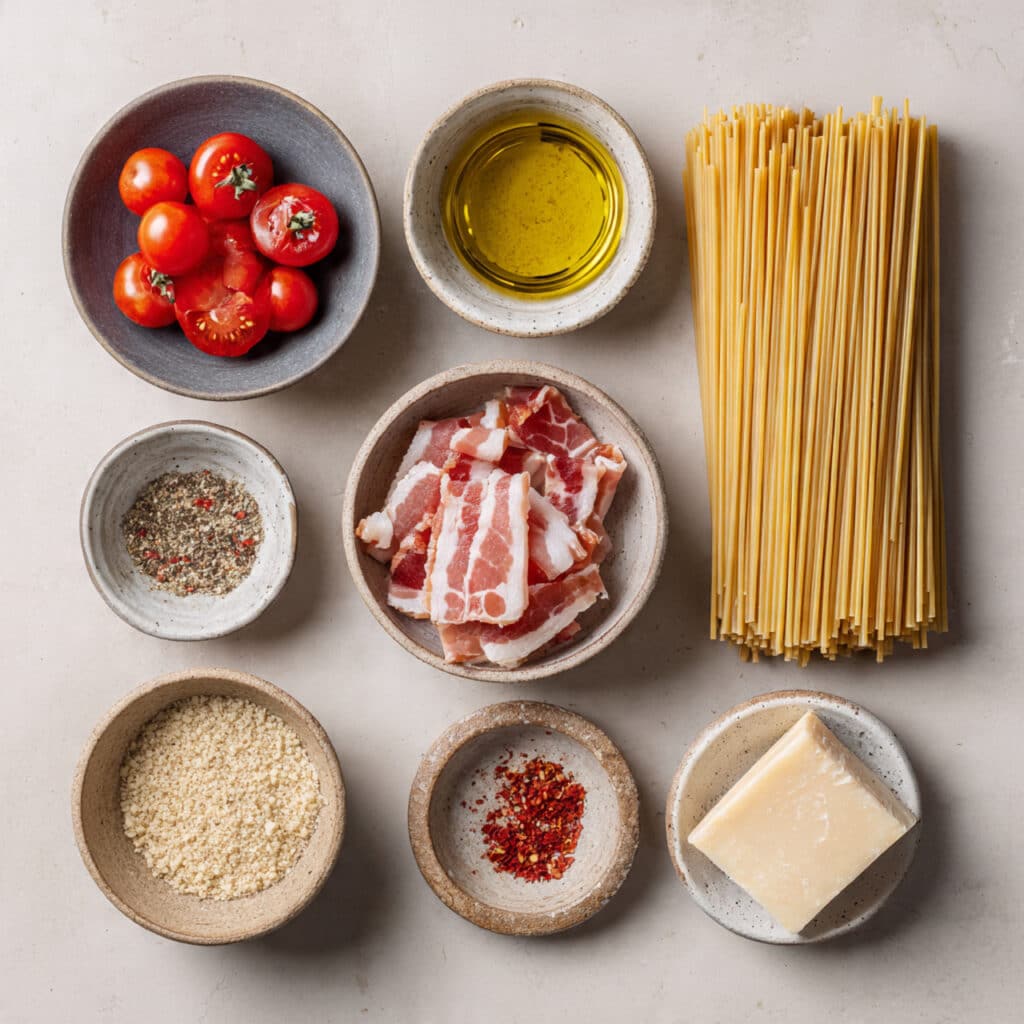
The beauty of this dish comes from how a handful of ingredients create something deep, glossy, and incredibly satisfying. Here are the ingredients you’re going to need, and why each one matters.
- Bucatini: 12 ounces, the ideal pasta for this sauce because the thick hollow strands catch the tomato and rendered guanciale beautifully.
- Guanciale: 6 ounces, cut into small strips, this is the heart of the dish and brings rich savory flavor plus crisp texture.
- Whole Peeled Tomatoes: 28 ounces, crushed by hand or with a spoon, they create the body of the sauce and keep it bright yet mellow.
- Pecorino Romano: 1 cup finely grated, plus more for serving, this adds salty sharpness and helps round out the tomato richness.
- Extra Virgin Olive Oil: 1 teaspoon, just enough to help the guanciale get started if needed.
- Crushed Red Pepper Flakes: 1/4 teaspoon, for a subtle background heat that keeps the sauce lively.
- Freshly Ground Black Pepper: 1/2 teaspoon, adds warmth and depth right at the end.
- Kosher Salt: to taste, used mainly for the pasta water and adjusted carefully at the finish.
Easy Swaps When You Need Them
And now let’s talk flexibility, because real cooking sometimes means working with what is actually in the kitchen.
Bucatini: Spaghetti or rigatoni.
Guanciale: Pancetta, if guanciale is hard to find.
Pecorino Romano: Parmesan, though the flavor will be a little milder and less punchy.
Whole Peeled Tomatoes: Crushed tomatoes, preferably a good-quality canned variety.
Crushed Red Pepper Flakes: A small pinch of chili powder or finely chopped mild red chili.
Ingredients That Truly Steal The Show
Some ingredients do more than just show up, they define the entire mood of the dish.
Guanciale: This cured pork cheek brings crisp edges, rendered richness, and a depth that feels almost buttery once it hits the warm sauce.
Pecorino Romano: Sharp, salty, and a little earthy, this cheese gives the final bowl its signature edge and ties the tomato and pork together beautifully.
Let’s Cook This Step By Step
This is the fun part, and it moves pretty quickly once everything is prepped. Here are the steps you’re going to follow.
- Preheat Your Equipment: Bring a large pot of well-salted water to a boil. Set a large skillet over medium heat so it is ready when you need it.
- Combine Ingredients: Crush the whole peeled tomatoes with your hands or a spoon in a bowl. Grate the pecorino romano and keep it nearby for finishing.
- Prepare Your Cooking Vessel: Add the guanciale and olive oil to the skillet. Cook gently, stirring now and then, until the fat renders and the edges turn crisp and golden.
- Assemble the Dish: Stir in the crushed red pepper flakes, then add the tomatoes. Simmer the sauce for about 10 to 12 minutes until slightly thickened and glossy.
- Cook to Perfection: Drop the bucatini into the boiling water and cook until just shy of al dente. Reserve 1 cup of pasta water, then transfer the pasta to the skillet.
- Finishing Touches: Toss the pasta with the sauce, adding a splash of pasta water as needed. Lower the heat, add the pecorino and black pepper, and toss again until the sauce looks silky and clings to every strand.
- Serve and Enjoy: Twirl into warm bowls, top with extra pecorino, and serve right away while the sauce is glossy and the guanciale is still crisp in spots.
How The Texture And Flavor Come Together
What makes this bowl so addictive is the contrast. The sauce is silky and lightly thickened, the bucatini stays pleasantly chewy, and the guanciale adds those irresistible crisp little bites. Then the cheese comes in and softens into the heat, giving the sauce a fuller, rounder finish.
Flavor-wise, it is all about layers. First comes the gentle sweetness of tomato, then the deep savory richness from the rendered pork, and finally that salty sharp hit from the pecorino. It is lively, balanced, and just bold enough to keep every forkful interesting.
Handy Tips For Your Best Bowl Yet
A few small touches make this dish feel even more reliable, especially the first time you cook it.
- Use good canned tomatoes: They really matter here because the sauce is so simple.
- Keep the sauce moving: Stir now and then so it reduces evenly and does not catch on the pan.
- Reserve extra cheese for serving: That final sprinkle wakes everything up.
- Finish fast: Serve as soon as the pasta is glossy and coated for the best texture.
Common Slip-Ups And How To Dodge Them
Even simple recipes have a few tiny traps, but they are easy to avoid once you know what to watch for.
- Cooking the guanciale too hard: This can make it tough instead of crisp and tender. Let it render slowly.
- Adding too much salt too soon: The cheese and pork already carry salt, so season carefully.
- Over-reducing the sauce: If it gets too thick, the pasta can feel dry. A splash of pasta water fixes it quickly.
- Letting the pasta sit too long before serving: Long pasta loves to keep absorbing sauce, so serve while it is still silky.
Nutrition Snapshot At A Glance
Here is a simple look at the numbers, keeping in mind that exact values can shift depending on your brand of pasta, tomatoes, and cheese.
Servings: 4
Calories per serving: 610
Note: These are approximate values.
Time Breakdown For Planning Dinner
This recipe moves quickly, which is part of its charm.
Prep Time: 10 minutes
Cook Time: 20 minutes
Total Time: 30 minutes
Make-Ahead And Storage Tips That Actually Help
If you want a smoother dinner later, the sauce can be made ahead and refrigerated for up to 3 days. Rewarm it gently in a skillet, then toss with freshly cooked pasta and a little pasta water so it loosens back into a silky consistency.
Leftovers can be stored in an airtight container in the fridge for up to 3 days. For freezing, the sauce alone works better than fully dressed pasta. Freeze the sauce for up to 2 months, then thaw overnight in the fridge before reheating. To reheat, use low heat on the stove with a splash of water so the sauce relaxes instead of tightening.
The Best Ways To Serve It
This pasta loves simple company. A crisp green salad with a sharp vinaigrette works beautifully, because it cuts through the richness without stealing attention. Warm crusty bread is also a great idea if you want something to swipe through the extra sauce at the bottom of the bowl.
For presentation, twirl the pasta high into the center of a warm bowl, then finish with extra pecorino and a crack of black pepper. It looks elegant without trying too hard, which honestly suits the dish perfectly.
Smart Ideas For Turning Leftovers Into Something New
A leftover portion can become a very good lunch with almost no effort. Warm it gently and top with extra pecorino for a refreshed bowl that still feels satisfying.
You can also turn leftovers into a baked pasta moment. Place them in a small baking dish, add a little extra cheese on top, and bake until hot and lightly golden. It is a lovely second act and tastes far more intentional than a basic reheat.
Extra Little Details That Make Cooking Easier
Keep your cheese finely grated so it melts quickly and evenly. Thick shreds tend to sit on top instead of blending into the sauce.
Warm your serving bowls if you can. It sounds tiny, but it helps the pasta stay glossy and hot for longer, especially when you are serving a group.
And one more thing, do not rinse the pasta. That starch on the surface is exactly what helps the sauce cling in the best way.
Make It Look As Good As It Tastes
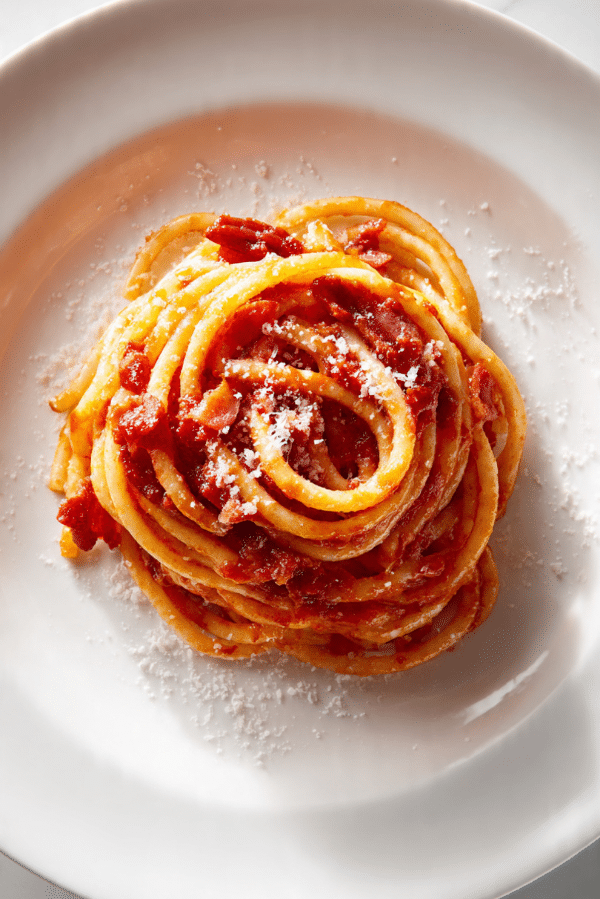
This dish already has beautiful color, so lean into it. Use a white bowl or plate to let the red sauce and pale pecorino pop. Twirl the pasta neatly in the center and let a few crisp guanciale pieces stay visible on top.
A final dusting of cheese and a touch of black pepper give it that restaurant-style finish. It looks impressive, but still warm and inviting, which is exactly the energy you want on the table.
Variations Worth Trying
Sometimes it is nice to keep the spirit of a classic while changing the mood just a little.
- Spicier Version: Add an extra pinch of crushed red pepper flakes for more heat.
- Rigatoni Twist: Use rigatoni instead of bucatini for a chunkier, heartier feel.
- Extra Tomato Forward: Simmer the tomatoes a few extra minutes for a thicker, deeper sauce.
- Cheese Lover’s Finish: Mix in a little more pecorino at the end for a creamier, more intense finish.
- Pancetta Version: Use pancetta when guanciale is unavailable, knowing the flavor will be slightly less rich.
FAQ’s
Q1: Can I use spaghetti instead of bucatini?
Yes, absolutely. Spaghetti works very well and still gives you that classic long-pasta feel.
Q2: Is guanciale really necessary?
It gives the most authentic flavor and texture, but pancetta is the closest substitute when needed.
Q3: Can I make it less spicy?
Yes. Just reduce or skip the crushed red pepper flakes and the dish will still taste wonderful.
Q4: Why is my sauce too thick?
It probably reduced a bit too much. Add reserved pasta water a little at a time until it loosens.
Q5: Why did my cheese clump?
The pan was likely too hot. Lower the heat before adding the pecorino and toss quickly.
Q6: Can I make the sauce in advance?
Yes. The sauce keeps well in the fridge for up to 3 days and reheats nicely.
Q7: What tomatoes are best here?
Good-quality canned whole peeled tomatoes usually give the best flavor and texture.
Q8: Can I freeze the finished pasta?
You can, but freezing the sauce alone is usually better for texture.
Q9: How salty should the sauce be?
Moderate at first. Guanciale and pecorino add plenty of salt later, so taste before adding more.
Q10: Is this good for guests?
Very much so. It feels elegant, tastes bold, and comes together fast enough to keep hosting stress low.
Conclusion
This is one of those pasta dishes that reminds you how powerful a few good ingredients can be. It is cozy, savory, glossy, and deeply satisfying without asking for much fuss at all. The sauce clings to every strand, the guanciale brings those crisp little bites, and the pecorino ties it all together in the most delicious way. Trust me, once you make it, this one will be very hard to forget.
Print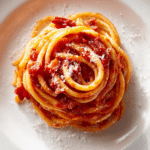
Bucatini Amatriciana
Description
A classic Roman pasta dish made with bucatini, crisp guanciale, tomatoes, pecorino romano, and a touch of chili for a rich, savory, and deeply comforting bowl.
Ingredients
- 12 ounces bucatini
- 6 ounces guanciale, cut into small strips
- 28 ounces whole peeled tomatoes, crushed by hand or with a spoon
- 1 cup finely grated pecorino romano, plus more for serving
- 1 teaspoon extra virgin olive oil
- 1/4 teaspoon crushed red pepper flakes
- 1/2 teaspoon freshly ground black pepper
- Kosher salt, to taste
Instructions
- Bring a large pot of well-salted water to a boil and set a large skillet over medium heat.
- Crush the whole peeled tomatoes in a bowl and finely grate the pecorino romano.
- Add the guanciale and olive oil to the skillet and cook gently until the fat renders and the guanciale becomes crisp and golden.
- Stir in the crushed red pepper flakes, then add the crushed tomatoes and simmer for 10 to 12 minutes until slightly thickened.
- Cook the bucatini in the boiling water until just shy of al dente. Reserve 1 cup of pasta water.
- Transfer the pasta to the skillet and toss with the sauce, adding a splash of pasta water as needed.
- Lower the heat, add the pecorino romano and black pepper, and toss until the sauce is silky and coats the pasta.
- Serve immediately with extra pecorino romano on top.
Notes
- Render the guanciale slowly for the best texture and flavor.
- Save pasta water to loosen the sauce and help it cling to the noodles.
- Add the cheese over low heat so it melts smoothly.
- Taste before adding extra salt, since the guanciale and pecorino are naturally salty.